www.hypersmash.com

تابعنا على شبكاتنا الإجتماعية

This is default featured post 1 title

Go to Blogger edit html and find these sentences.Now replace these sentences with your own descriptions.This theme is Bloggerized by Lasantha Bandara - Premiumbloggertemplates.com.

This is default featured post 2 title

Go to Blogger edit html and find these sentences.Now replace these sentences with your own descriptions.This theme is Bloggerized by Lasantha Bandara - Premiumbloggertemplates.com.

This is default featured post 3 title

Go to Blogger edit html and find these sentences.Now replace these sentences with your own descriptions.This theme is Bloggerized by Lasantha Bandara - Premiumbloggertemplates.com.

This is default featured post 4 title

Go to Blogger edit html and find these sentences.Now replace these sentences with your own descriptions.This theme is Bloggerized by Lasantha Bandara - Premiumbloggertemplates.com.

This is default featured post 5 title

Go to Blogger edit html and find these sentences.Now replace these sentences with your own descriptions.This theme is Bloggerized by Lasantha Bandara - Premiumbloggertemplates.com.

Showing posts with label Personification. Show all posts

Friday, April 26, 2013

Introduction to Poetry full explanation

Introduction to Poetry


Poetry: is a literary work in metrical form or patterned language. It is the art or rhythmical composition, written or spoken. It is designed to produce pleasure. Poetry is felt then to be produced.

Types of Poetry
1.     Narrative poetry.
2.     Descriptive poetry.
3.     Reflective poetry.
4.     Lyric.
5.     Sonnet.

The Sonnet: is a poem of fourteen (14) lines. It is divided in to two parts; the first part is the first eight lines called octave, where as the second part is the last six lines called the sestet.

e.g.: “Death be not proud”
    by: John Donne. 

Type of Sonnets:
1.     The Petrarchain Sonnet.
2.     The Shakespearean Sonnet.
3. The Miltonic Sonnet.

Poetic Devices

          Poetic devices can be classified into two types: meaning devices and sound devices.

1. Meaning devices:

It can also be subdivided in to the following:
1. Simile: A direct comparison of two completely different objects, using like or as but there is one common aspect between them.
2. Metaphor: An implied comparison between two totally different objects, yet there is an aspect of similarity between them.
3. Extended metaphor: a metaphor which covers a whole poem or a great part of it. Sir. Thomas Waytt's "Hind" contain an extended metaphor, with the hunter representing the passionate poet and the deer representing his beloved.
4. Conceit: a far-fetched comparison between very dissimilar things. It usually involves intellectual cleverness. In "A Valediction: Forbidding Mourning" Donne compares his soul and that of his love to the two legs of a compass used to make a circle.
5. Synecdoche: a figure of speech in which part of something is used to signify the whole and it refers to the whole used to signify the part. As in "hired hands"
6. Personification: to give animals, ideas and inanimate object human quality. In "The Chariot" Emily Dickenson compares death to a groom who comes to take her on her wedding night.
                 Because I could not stop for death
                 He kindly stopped for me 
7. Apostrophe: an address to an absent person, an abstract concept, or an inanimate object directly. In "Go Lovely Rose" Edmund Waller talks directly to a rose and asks it to be his messenger to his lady.
8. Paradox: a metaphorical statement of seeming self-contradiction. Yet it implies a logical meaning. In "Althea From Prison" Richard Lovelace challenges authority with his own concept of freedom.
Stone walls do not a prison make,
Nor iron bars a cage
9. Oxymoron: a paradoxical statement that combines two terms that are normally opposite. Surrey describes beauty of a lady as a "bitter sweet".
10. pun: a play in words which suggest more than possible meaning. "Shake, thou shake the world" the first "shake" refers to Shakespeare in brief, while the second hold is dictionary meaning.
11. Irony: the term used to describe a contrast between what appears to be and what really is. Andrew Marvell ironies his lady's stubborn attitude in the following way:
The grave's fin private place,
But none. I think, do there embrace
12. Symbol: something relatively concrete, such as object, action, character, or scene which refers to something relatively abstract. A word "flag" refers sovereignty, all colors signify symbolic implications.
13. Image: an idea, a concept, or experience is presented concretely in a series of lines of verse.
Drink to me only with thine eyes
And I will pledge with mine
Or leave a kiss but in the cup
And I'll not look for wine
     Ben Jonson has embodies his concept of spiritual in his concrete image which uses looks into eyes and kisses through a cup.
14. Hyperbole: a metaphorical statement which involves great exaggeration, whose effect may be serious or comic. Andrew Marvel's description of his "vegetable love" in "To His Coy Mistress".
15. Allusion: a brief indirect reference to a person, event, or place, real or fictitious, or to a work of art. Seal of Prophets refers to prophets Muhammad, the shepherd signals to prophet Moses. Mother of battles (war in the Gulf against U.S.A), the crucified prophet Jesus Christ.
16. Antithesis: a contrast or opposition in meaning, emphasized by a parallel in grammatical structure.
A tongue of honey, a heart of gall
                 There is honey in the tongue, but bitterness of heart.
17. Zeugma: a verb which has a grammatical connection with more than one object, each of which suggest a different meaning
"Go Lovely Rose"    
Tell her that wastes her time and me
                      V.        O.1            O.2
                    Edmund Waller starts a grammatical with two object. In each, the verb "wastes" suggests a different meaning. In the first, it means spends her time foolishly, while in the second, it gives the meaning of "torture me".

2. Sound Devices

1. Alliteration: the repetition of consonant sounds at the beginning of words or within words, particularly in accented syllables. It can be used to reinforce meaning. Unity thought or simply for musical effect.
2. Assonance: the repetition of similar vowel sound followed by different consonant sound in stressed syllables or words. It is often used instead of rhyme.
3. Repetition: to repeat a word or phrase in a line of verse or a line is repeated in a poem in order to achieve emphasis or musical effect or merely wordiness.
4. Onomatopoeia: Imitation of the sound of words spoken. Some single words in which sound suggests meaning.
5. Caesura: a pause usually near the middle in a line of verse. It can be indicated by a punctuation mark.
6. Refrain: the repetition of one or more lines in each stanza of a poem.
Sixteenth Century of Poetry 1558-1603

This period covers many men of letter and especially in poetry; there are some poets who are well known, some of them are
1.                 Sir. Thomas Wyatt
2.                 Henry Howard, Earl of Surrey
3.                 Edmund Spenser.
4.                 Sir. Philip Sidney.
5.                 Sir Walter Ralegh.
6.                 William Shakespeare.
7.                 Christopher Marlowe.
8.                 Thomas Campion.


1.           Thomas Wyatt was the first one who introduced the sonnet to England from Petrarch (Italy). Its main structural division is (octave and sestet), (abba, abba, cde, cde).
2.           Eral of Surrey modified the Italian scheme as (abab, cdcd, efef, gg). It is also called Shakespearian.
3.                 Sir. Philip Sidney: he is also experimenter in the English sonnet, he was famous (Terza Rima), (abba, abba, cdc, dee).
4.                 Spenser: used the modified English form following the division (abab, bcbc, cdcd, ee).

Wednesday, April 24, 2013

الفصل الثالث محاكمة هيستر برين


الفصل الثالث

كان فى هندي من الهنود الحمر و كان شكله غريب بس مش لدرجة انهم راح يسبو هستر ويطالعو فيه وكان جمبه رجل ابيض لابس لبس همجي على متحضر و جسمه صغير و كان واضح على وجهه علامات الذكاء و التقدم فى السن وكان واحد من كتوفه اعلى من الثاني. لما هستر شافت هذا الرجل حضنت الطفل لدرجة صار يبكى وما انتبهت لبكائه. وهو طالع لها بنظره عفوية بعدين نظر لها بتمعن و وجهه اسود بس بعدين اتحكم بردة فعله و لما شافها انتبتهت له حط اصباعه على فمه بإشارة لها انها تسكت ولمس كتف واحد واقف جمبه وسئله مين هذي؟ واش حكايتها! الرجل قاله شكلك غريب عن هنا هذى هستر براين الى عملت الفضيحة فى الكنيسة قالة ايوة أنا غريب كنت فى البحر وضعت وهذا الهندي هو الى انقذ حياتى ورجع سئله عن حكياة هستر راح الرجال قاله ان هذى المرأة زوجها واحد انجليزي و ارسلها قبله الى بوسطن و بعدين طلعت الفضيحة وقاله ان البنت الى شايلتها ماهى من زوجها وهى رافضة تعترف مين ابو البنت وقال المفروض ان زوجها يجي عشان يشوف الى صار وهذول الى فى الكنيسة قالو انه فى احد ضحك عليها عشان كذا ماعاقبوها العقاب القاسي واكتفو بأنها توقف عالمنصة دى كل يوم تلات ساعات وتشيل الحرف على صدرها العمر كله.هذى العقوبة حكيمة انها تشيل العار طول عمرها حتى لما تموت راح ينحط الحرف على قبرها لكن يؤسفنى ان شريكها فى الجريمة مارح يوقف معاها لكنه راح ينعرف راح ينعرف راح ينعرف. الرجل شكره ومشي وهستر كانت تطالع له وكئنه مابقى في المكان غيرها وغيره وكانت خايفه من مقابلة الشخص دا.فى احد كان ينادى هستر بس هى ما انتبهت الا لما ناداها مره ثانيه.طالعت هستر فى الى كان يناديها وكان جون وينلسون هو الى ينادي عليها وهو من كبار بوسطن وقالها ان هذا الشخص –اشار لرجل يقف لجواره الى اسمه المنستر ديمزديل- اقنعنى انى مايصير اخليكي تفضحى أسرار قلبك قدام الناس وهذا الرجل طلب انه يكون هو الى يتكلم معاكي ويعرف منك شريكك في هذه الجريمة . المنستر ديمزديل سئها عن شريكها و طلب منها تعترف لكنها قالت انها راح تشيل عارها وعارها حاول يقنعها تعترف لكن هى رفضت وخلص عقابها ورجعت للسجن تانى.

Monday, April 22, 2013

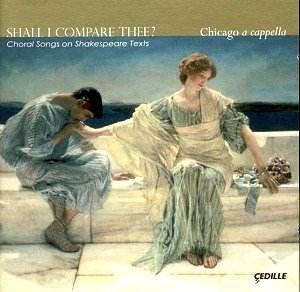
SONNET 18 PARAPHRASE + analysis + ترجمة للعربي


SONNET 18


PARAPHRASE
Shall I compare thee to a summer's day?
Shall I compare you to a summer's day?
Thou art more lovely and more temperate:
You are more lovely and more constant:
Rough winds do shake the darling buds of May,
Rough winds shake the beloved buds of May
And summer's lease hath all too short a date:
And summer is far too short:
Sometime too hot the eye of heaven shines,
At times the sun is too hot,
And often is his gold complexion dimm'd;
Or often goes behind the clouds;
And every fair from fair sometime declines,
And everything beautiful sometime will lose its beauty,
By chance or nature's changing course untrimm'd;
By misfortune or by nature's planned out course.
But thy eternal summer shall not fade
But your youth shall not fade,
Nor lose possession of that fair thou owest;
Nor will you lose the beauty that you possess;
Nor shall Death brag thou wander'st in his shade,
Nor will death claim you for his own,
When in eternal lines to time thou growest:
Because in my eternal verse you will live forever.
So long as men can breathe or eyes can see,
So long as there are people on this earth,
So long lives this and this gives life to thee.
So long will this poem live on, making you immortal.


ANALYSIS
temperate (1): i.e., evenly-tempered; not overcome by passion.
the eye of heaven (5): i.e., the sun.

every fair from fair sometime declines (7): i.e., the beauty (fair) of everything beautiful (fair) will fade (declines).

Compare to Sonnet 116: "rosy lips and cheeks/Within his bending sickle's compass come."
nature's changing course (8): i.e., the natural changes age brings.
that fair thou ow'st (10): i.e., that beauty you possess.
in eternal lines...growest (12): The poet is using a grafting metaphor in this line. Grafting is a technique used to join parts from two plants with cords so that they grow as one. Thus the beloved becomes immortal, grafted to time with the poet's cords (his "eternal lines"). For commentary on whether this sonnet is really "one long exercise in self-glorification", please see below.
Sonnet 18 is the best known and most well-loved of all 154 sonnets. It is also one of the most straightforward in language and intent. The stability of love and its power to immortalize the poetry and the subject of that poetry is the theme.
The poet starts the praise of his dear friend without ostentation, but he slowly builds the image of his friend into that of a perfect being. His friend is first compared to summer in the octave, but, at the start of the third quatrain (9), he is summer, and thus, he has metamorphosed into the standard by which true beauty can and should be judged.
من موقع :
شرح اخر
1. Shall I compare thee to a summer's day?

This is taken usually to mean 'What if I were to compare thee etc?' The stock comparisons of the loved one to all the beauteous things in nature hover in the background throughout. One also remembers Wordsworth's lines: 

We'll talk of sunshine and of song,
And summer days when we were young, 
Sweet childish days which were as long
As twenty days are now.
Such reminiscences are indeed anachronistic, but with the recurrence of words such as 'summer', 'days', 'song', 'sweet', it is not difficult to see the permeating influence of the Sonnets on Wordsworth's verse.
2. Thou art more lovely and more temperate:
The youth's beauty is more perfect than the beauty of a summer day. more temperate - more gentle, more restrained, whereas the summer's day might have violent excesses in store, such as are about to be described.
3. Rough winds do shake the darling buds of May,

May was a summer month in Shakespeare's time, because the calendar in use lagged behind the true sidereal calendar by at least a fortnight. 

darling buds of May - the beautiful, much loved buds of the early summer; favourite flowers.
4. And summer's lease hath all too short a date:
Legal terminology. The summer holds a lease on part of the year, but the lease is too short, and has an early termination (date).
5. Sometime too hot the eye of heaven shines,

Sometime = on occasion, sometimes; 

the eye of heaven = the sun.
6. And often is his gold complexion dimmed,
his gold complexion = his (the sun's) golden face. It would be dimmed by clouds and on overcast days generally.
7. And every fair from fair sometime declines,
All beautiful things (every fair) occasionally become inferior in comparison with their essential previous state of beauty (from fair). They all decline from perfection.
8. By chance, or nature's changing course untrimmed:

By chance accidents, or by the fluctuating tides of nature, which are not subject to control, nature's changing course untrimmed

untrimmed - this can refer to the ballast (trimming) on a ship which keeps it stable; or to a lack of ornament and decoration. The greater difficulty however is to decide which noun this adjectival participle should modify. Does it refer to nature, or chance, or every fair in the line above, or to the effect of nature's changing course? KDJ adds a comma after course, which probably has the effect of directing the word towards all possible antecedents. She points out that nature's changing course could refer to women's monthly courses, or menstruation, in which case every fair in the previous line would refer to every fair woman, with the implication that the youth is free of this cyclical curse, and is therefore more perfect.
9. But thy eternal summer shall not fade,
Referring forwards to the eternity promised by the ever living poet in the next few lines, through his verse.
10. Nor lose possession of that fair thou ow'st,

Nor shall it (your eternal summer) lose its hold on that beauty which you so richly possess. ow'st = ownest, possess. 

By metonymy we understand 'nor shall you lose any of your beauty'.
11. Nor shall death brag thou wander'st in his shade,
Several half echoes here. The biblical ones are probably 'Oh death where is thy sting? Or grave thy victory?' implying that death normally boasts of his conquests over life. And Psalms 23.3.: 'Yea though I walk through the valley of the shadow of death I will fear no evil ' In classical literature the shades flitted helplessly in the underworld like gibbering ghosts. Shakespeare would have been familiar with this through Virgil's account of Aeneas' descent into the underworld in Aeneid Bk. VI.
12. When in eternal lines to time thou grow'st,

in eternal lines = in the undying lines of my verse. Perhaps with a reference to progeny, and lines of descent, but it seems that the procreation theme has already been abandoned. 

to time thou grow'st - you keep pace with time, you grow as time grows.
13. So long as men can breathe, or eyes can see,
For as long as humans live and breathe upon the earth, for as long as there are seeing eyes on the eart.
14. So long lives this, and this gives life to thee.
That is how long these verses will live, celebrating you, and continually renewing your life. But one is left with a slight residual feeling that perhaps the youth's beauty will last no longer than a summer's day, despite the poet's proud boast. 

من موقع :
شرح اخر من موقع سبارك نوت :
Summary
The speaker opens the poem with a question addressed to the beloved: “Shall I compare thee to a summer’s day?” The next eleven lines are devoted to such a comparison. In line 2, the speaker stipulates what mainly differentiates the young man from the summer’s day: he is “more lovely and more temperate.” Summer’s days tend toward extremes: they are shaken by “rough winds”; in them, the sun (“the eye of heaven”) often shines “too hot,” or too dim. And summer is fleeting: its date is too short, and it leads to the withering of autumn, as “every fair from fair sometime declines.” The final quatrain of the sonnet tells how the beloved differs from the summer in that respect: his beauty will last forever (“Thy eternal summer shall not fade...”) and never die. In the couplet, the speaker explains how the beloved’s beauty will accomplish this feat, and not perish because it is preserved in the poem, which will last forever; it will live “as long as men can breathe or eyes can see.”
Commentary
This sonnet is certainly the most famous in the sequence of Shakespeare’s sonnets; it may be the most famous lyric poem in English. Among Shakespeare’s works, only lines such as “To be or not to be” and “Romeo, Romeo, wherefore art thou Romeo?” are better-known. This is not to say that it is at all the best or most interesting or most beautiful of the sonnets; but the simplicity and loveliness of its praise of the beloved has guaranteed its place.
On the surface, the poem is simply a statement of praise about the beauty of the beloved; summer tends to unpleasant extremes of windiness and heat, but the beloved is always mild and temperate. Summer is incidentally personified as the “eye of heaven” with its “gold complexion”; the imagery throughout is simple and unaffected, with the “darling buds of May” giving way to the “eternal summer”, which the speaker promises the beloved. The language, too, is comparatively unadorned for the sonnets; it is not heavy with alliteration or assonance, and nearly every line is its own self-contained clause—almost every line ends with some punctuation, which effects a pause.
Sonnet 18 is the first poem in the sonnets not to explicitly encourage the young man to have children. The “procreation” sequence of the first 17 sonnets ended with the speaker’s realization that the young man might not need children to preserve his beauty; he could also live, the speaker writes at the end of Sonnet 17, “in my rhyme.” Sonnet 18, then, is the first “rhyme”—the speaker’s first attempt to preserve the young man’s beauty for all time. An important theme of the sonnet (as it is an important theme throughout much of the sequence) is the power of the speaker’s poem to defy time and last forever, carrying the beauty of the beloved down to future generations. The beloved’s “eternal summer” shall not fade precisely because it is embodied in the sonnet: “So long as men can breathe or eyes can see,” the speaker writes in the couplet, “So long lives this, and this gives life to thee.”
من موقع :
شرح اخر :


::Analysis::


Shakespeare’s eighteenth sonnet is, perhaps, one of the best-known sonnets contained in the English literary canon.

It is a conventional Shakespearean sonnet that explores conventional themes in an original way. 

With characteristic skill Shakespeare uses the sonnet to exalt poetry and his beloved.


The first quatrain introduces the primary conceit of the sonnet, the comparison of the speaker’s beloved to a summer’s day. 

In the first line the speaker introduces the comparison of his beloved to a summer’s day. 
The speaker then builds on this comparison when he writes, 
“Thou art more lovely and more temperate” (2) because he is describing his beloved in a way that could also describe summer. 
When he describes “rough winds [that] do shake the darling buds of May,” 
(3) he is using rough winds as a metaphor for capricious chance and change, 
and he implies that his beloved does not suffer from these winds as summer does. 
The first quatrain, therefore, introduces a comparison that is expanded upon by the remaining two quatrains.


The second quatrain strengthens the comparison of the beloved to a summer’s day. 

The speaker anthropomorphizes the sky, or “heaven,” (5) by using the metaphor of an “eye”
(5) for the sun so that the comparison between a person and a season becomes vivid. 
By assigning heaven an “eye,” the speaker invokes the image of his beloved’s eyes. 
Similarly, in the next line when the speaker mentions that summer’s “gold complexion” is often “dimmed,” (
6) he is attempting to compare another human attribute of his beloved with some trait of summer. 
The second quatrain presents summer as possessing only mutable beauty.


The third quatrain no longer focuses on the mutability of summer, but it speaks of the nearly eternal nature of the memory of the beloved. 

When the speaker assures his beloved that her “eternal summer shall not fade,”


(9) he is using summer as a metaphor for her beauty.

Using the word “fade” facilitates the comparison of the abstract notion of a summer’s day to the concrete person of the beloved because fading is a quality of light. 
Similarly, when the speaker writes of the beloved entering the “shade” (10) of death, he is expanding on the use of the metaphor and reinforcing the poem’s primary conceit.


When the speaker boasts that his beloved will not suffer the same fate as a summer’s day because he has committed her to “eternal lines,” (12) he adds the theme of poetry itself to a sonnet that had previously been a love poem. 

Shakespeare gives his beloved immortality through poetry that God did not give to a summer’s day.


The couplet concludes the sonnet by tying together the themes of love and poetry. 

In it the speaker starkly contrasts the life spans of his poem and his beloved’s memory to the fleeting nature of a summer’s day. 
He boasts that, unlike a summer’s day, his poetry and the memory of his beloved will last “so long as men can breathe or eyes can see” (13). 
This last comparison provides a stark contrast to the time period, “a summer’s day,” (1) introduced at the beginning and exalts poetry along with the beloved.


Shakespeare used a conventional form of poetry to praise poetry and his beloved.

He boasted that both would be preserved nearly eternally. Five hundred years later, no one refutes his boast.
-------------------

هذه هى القصيدة رقم
18 الشهيرة التى يبدأ فيها شكسبير بعقد مقارنة بين جمال محبوبته واعتدال الجو فى
يوم من أيام الصيفالأنجليزى ثم ينكر هذه المقارنة لأن الصيف
فصل متقلب وينتهى الىان محبوبته تكسر حدود الزمن لأن الشاعر قد
خلدها فى قصيدته
التى لابد أن يكتب لها الخلود فى رأيه وأن
ينشدها الناس على مر الزمان.ولتلك القصيدة ترجمتانالترجمة الأولى

ألا تشبهين صفاء المصيف
بل أنت أحلى وأصفى سماء
ففى الصيف تعصف ريح الذبول
وتعبث فى برعمات الربيع
ولا يلبث الصيف حتى يزول
وفى الصيف تسطع عين السماء
ويحتدم القيظ مثل الأتون
وفى الصيف يحجب عنا السحاب
ضيا السما وجمال ذكاء
وما من جميل يظل جميلا
فشيمة كل البرايا الفناء
ولكن صيفك ذا لن يغيب
ولن تفتقدى فيه نور الجمال
ولن يتباهى الفناء الرهيب
بأنك تمشين بين الظلال
اذا صغت منك قصيد الأبد
فمادام فى الأرض ناس تعيش
ومادام فيها عيون ترى
فسوف يردد شعرى الزمان
وفيه تعيشين بين الورى

والترجمة الثانية لفطينه النائب- من كتاب فن
الترجمة- للدكتور صفاء خلوصى-

1986

من ذا يقارن حسنك المغرى بصيف قد تجلى
وفنون سحرك قد بدت فى ناظرى أسمى وأغلىتجنى الرياح العاتيات على البراعم وهى جذلى

والصيف يمضى مسرعا اذ عقده المحدود ولى
كم أشرقت عين السماء بحرها تلتهب
ولكم خبا فى وجهها الذهبى نور يغرب
لابد للحسن البهى عن الجميل سيذهب
فالدهر تغير واطوار الطبيعة قلب
لكن صيفك سرمدى ما اعتراه ذبول
لن يفقد الحسن الذى ملكت فيه بخيل
والموت لن يزهو بظلك فى حماه يجول
ستعاصرين الدهر فى شعرى وفيه أقول:
ما دامت الأنفاس تصعد والعيون تحدق
سيظل شعرى خالداً وعليك عمراً يغدق


Twitter Delicious Facebook Digg Stumbleupon Favorites More

 
www.hypersmash.com