www.hypersmash.com

تابعنا على شبكاتنا الإجتماعية

This is default featured post 1 title

Go to Blogger edit html and find these sentences.Now replace these sentences with your own descriptions.This theme is Bloggerized by Lasantha Bandara - Premiumbloggertemplates.com.

This is default featured post 2 title

Go to Blogger edit html and find these sentences.Now replace these sentences with your own descriptions.This theme is Bloggerized by Lasantha Bandara - Premiumbloggertemplates.com.

This is default featured post 3 title

Go to Blogger edit html and find these sentences.Now replace these sentences with your own descriptions.This theme is Bloggerized by Lasantha Bandara - Premiumbloggertemplates.com.

This is default featured post 4 title

Go to Blogger edit html and find these sentences.Now replace these sentences with your own descriptions.This theme is Bloggerized by Lasantha Bandara - Premiumbloggertemplates.com.

This is default featured post 5 title

Go to Blogger edit html and find these sentences.Now replace these sentences with your own descriptions.This theme is Bloggerized by Lasantha Bandara - Premiumbloggertemplates.com.

Showing posts with label PARAPHRASE. Show all posts

Saturday, April 27, 2013

Shakespeare Sonnet 55 analysis, paraphrase and theme

WILLIAM SHAKESPEARE


William Shakespeare was born in London and spent his childhood there. He received some formal Education. Suddenly he  appeared in London in connection with the theatre, and spent most of his life there writing for the stage. He spent the last few years of his life in his native town without any literary activity.
Shakespeare is the greatest playwright England ever produce, and his sonnets are among the best in the English language. The poetry of his plays, though written primarily for the stage, and often with a certain actor in mind, is characterized by variety of style, subject matter, and mood. His language can soft tender at other times. It is easy to detect certain verbosity in his poetry at certain times, while in others, especially in his later plays, his language tends to be condensed, almost terse, and both thought and feeling are revealed in brief, but clear image and description. Since he tried "to suit the word to the deed", his style can be high, middle, or low and even vulgar. With a sharp mind and intense imagination he was able to see into the complexities of human nature. His poetry also reveals wide knowledge of man in various social, political, or moral situations
If his plays reveal the greatness of his dramatic poetry, his sonnets are a record of his great lyrical power. He brought the English sonnet into  perfection, hence it is called the Shakespearian sonnet. It consists of Three quatrains and a final couplet. While a single is developed in the three quatrain the final couplet is conclusion that clinches the meaning or a twist in meaning which stands in contrast to the idea developed in the three quatrain.
The theme of Shakespeare's sonnet are death, love, immortality of poetry, and the vicissitude of life, and time. They are the most personal poems Shakespeare ever wrote, yet they tell us about his life. In these sonnets the plain and the ornate styles are to be found. The power of feeling, the depth of thought, and intense imagination are all to be found in these sonnets.    


Paraphrasing
In this sonnet, Shakespeare intended immortalize his friend W.H through poetry. For him, poetry will last longer than the greet monuments which where built to immortalize king or prince. Shakespeare says that the memory of his friend will be immortalized through his poetry because time will not affect his poetry and it will out-live because time can affect only the material things like the marble and the monument, but it can not effect poetry because it is kept in books and in the minds of the people. The great monuments are neglected, they are besmeared by time. They are often placed in open place, so, they are affected by the weather, rain, sun, storms…etc, and hence they lost their bright and became grime and dirty, also they will be ruined.
Also the statues and masonry will be ruined and destroyed by wars and civil disturbance, but the poet says that not even the sword of Mars (the god of war) not the wars fire could burn or destroy "the living record" of his friends memory. Also his friends memory will not be affected by the oblivion that comes with enmity and death, built will lasts and finds room in the minds' of the coming generation and it will last till. Judgment day Shakespeare says that till memory of poems. Judgment day comes, his friend memory will lives in his poem and he will dwell in the lover's eyes because the lovers when they read the sonnet as an expression of their own feeling for each other. They will think of the object of Shakespeare affection. In brief, the whole poem is like a firm declaration of the durability of love and art. The poet believed that through poetry he will immortalized his friend until judgment day.

Not marble, nor the gilded monuments (1): This line is likely an allusion to the lavish tombs of English royalty; in particular, to the tomb of Henry VII in Westminster Abbey, which contains a large sarcophagus made of black marble with gilded effigies of King Henry and his queen, Elizabeth of York.
with sluttish time (4): i.e., by filthy time.
 In Elizabethan England the word "sluttish" could describe either a sexually promiscuous woman or a grubby, unkempt woman. Here Shakespeare personifies Time as the latter.
broils (7): angry, violent quarrels or riots.
all-oblivious enmity (9): i.e., the war and decay that would render the subject of the poem forgotten.

 Sonnet 55 is one of Shakespeare's most famous works and a noticeable deviation from other sonnets in which he appears insecure about his relationships and his own self-worth. Here we find an impassioned burst of confidence as the poet claims to have the power to keep his friend's memory alive evermore.
 However, many believe that such an analysis ignores Shakespeare's paramount desire to immortalize his friend in verse, and not himself (as was the motive of most classical poets). "The Romans say: Because of my poem I will never die. Shakespeare says: Because of my poem you will never die....What distinguishes Shakespeare is that he values the identity of the beloved; he recognizes that the beloved has his own personal immortality, in no way dependent on poetry" (Martin, 158). By focusing on the word live, Shakespeare uses the language itself to emphasize his authorial intentions. Notice the word choices of outlive (2), living (8), oblivious (9), and live (14).


The Theme
The theme of the sonnet is the immortalizing power of poetry. It is a stock theme which had been treated by many poets, but nearly all of them were mainly concerned with their own fame in the future, while Shakespeare uniquely thinks of poetry as a means to an end. He is not concerned with his own personal glory.
Organization
The sonnet is divided into three parts.
In the first part (lines 1-4), in which Shakespeare speaks about the marble and monument of great men. He recalls ornate lambs in English church. He personifies time as a sluttish woman who allows the monuments to be besmeared with dust and grim.
In the second part (lines 5-8), he speaks about something which is more dangerous, than more neglect, it is the wars and civil disturbance which destroy and ruin the statues and the masonry.                                           
In the third part (lines 9-12), the poet speaks about the immortalization of the memory of his friend and how it will outlast the oblivion that comes with enmity and death. He concerned about his poetry as a means to immortalized his friend.

Language Elements in the Sonnet
1. Rhyme scheme:
The sonnet rhymed abab, cdcd, efef, gg. This a typical English sonnet.
2. Rhythm and Meter
The sonnet is written in Iambic pentameter lines.
3. Poetic Devices 
a. sound devices

Alliteration
The lines of the sonnet are knit together by alliterated initial letters
e.g: Marble/ monuments - prince/ powerful.. etc.
Assonance
Alliteration in the sonnet is supported by assonance as when "Mars" echoed in the same line by "wars" and "pace" by "praise".. etc.

Meaning devices
in the fourth line "Time" is personified as a sluttish woman who allows the marble and monuments to be besmeared with dust and grim, and in line six, "broils" is personified as a person who rout out the work of masonry.
The imagery of the sonnet is magnificently concrete as the words "besmeared" in line 4, "rout out" in line 6, and "pace forth" in line 10 exemplify.        


Monday, April 22, 2013

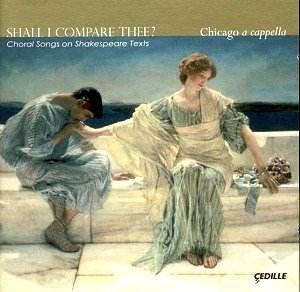
SONNET 18 PARAPHRASE + analysis + ترجمة للعربي


SONNET 18


PARAPHRASE
Shall I compare thee to a summer's day?
Shall I compare you to a summer's day?
Thou art more lovely and more temperate:
You are more lovely and more constant:
Rough winds do shake the darling buds of May,
Rough winds shake the beloved buds of May
And summer's lease hath all too short a date:
And summer is far too short:
Sometime too hot the eye of heaven shines,
At times the sun is too hot,
And often is his gold complexion dimm'd;
Or often goes behind the clouds;
And every fair from fair sometime declines,
And everything beautiful sometime will lose its beauty,
By chance or nature's changing course untrimm'd;
By misfortune or by nature's planned out course.
But thy eternal summer shall not fade
But your youth shall not fade,
Nor lose possession of that fair thou owest;
Nor will you lose the beauty that you possess;
Nor shall Death brag thou wander'st in his shade,
Nor will death claim you for his own,
When in eternal lines to time thou growest:
Because in my eternal verse you will live forever.
So long as men can breathe or eyes can see,
So long as there are people on this earth,
So long lives this and this gives life to thee.
So long will this poem live on, making you immortal.


ANALYSIS
temperate (1): i.e., evenly-tempered; not overcome by passion.
the eye of heaven (5): i.e., the sun.

every fair from fair sometime declines (7): i.e., the beauty (fair) of everything beautiful (fair) will fade (declines).

Compare to Sonnet 116: "rosy lips and cheeks/Within his bending sickle's compass come."
nature's changing course (8): i.e., the natural changes age brings.
that fair thou ow'st (10): i.e., that beauty you possess.
in eternal lines...growest (12): The poet is using a grafting metaphor in this line. Grafting is a technique used to join parts from two plants with cords so that they grow as one. Thus the beloved becomes immortal, grafted to time with the poet's cords (his "eternal lines"). For commentary on whether this sonnet is really "one long exercise in self-glorification", please see below.
Sonnet 18 is the best known and most well-loved of all 154 sonnets. It is also one of the most straightforward in language and intent. The stability of love and its power to immortalize the poetry and the subject of that poetry is the theme.
The poet starts the praise of his dear friend without ostentation, but he slowly builds the image of his friend into that of a perfect being. His friend is first compared to summer in the octave, but, at the start of the third quatrain (9), he is summer, and thus, he has metamorphosed into the standard by which true beauty can and should be judged.
من موقع :
شرح اخر
1. Shall I compare thee to a summer's day?

This is taken usually to mean 'What if I were to compare thee etc?' The stock comparisons of the loved one to all the beauteous things in nature hover in the background throughout. One also remembers Wordsworth's lines: 

We'll talk of sunshine and of song,
And summer days when we were young, 
Sweet childish days which were as long
As twenty days are now.
Such reminiscences are indeed anachronistic, but with the recurrence of words such as 'summer', 'days', 'song', 'sweet', it is not difficult to see the permeating influence of the Sonnets on Wordsworth's verse.
2. Thou art more lovely and more temperate:
The youth's beauty is more perfect than the beauty of a summer day. more temperate - more gentle, more restrained, whereas the summer's day might have violent excesses in store, such as are about to be described.
3. Rough winds do shake the darling buds of May,

May was a summer month in Shakespeare's time, because the calendar in use lagged behind the true sidereal calendar by at least a fortnight. 

darling buds of May - the beautiful, much loved buds of the early summer; favourite flowers.
4. And summer's lease hath all too short a date:
Legal terminology. The summer holds a lease on part of the year, but the lease is too short, and has an early termination (date).
5. Sometime too hot the eye of heaven shines,

Sometime = on occasion, sometimes; 

the eye of heaven = the sun.
6. And often is his gold complexion dimmed,
his gold complexion = his (the sun's) golden face. It would be dimmed by clouds and on overcast days generally.
7. And every fair from fair sometime declines,
All beautiful things (every fair) occasionally become inferior in comparison with their essential previous state of beauty (from fair). They all decline from perfection.
8. By chance, or nature's changing course untrimmed:

By chance accidents, or by the fluctuating tides of nature, which are not subject to control, nature's changing course untrimmed

untrimmed - this can refer to the ballast (trimming) on a ship which keeps it stable; or to a lack of ornament and decoration. The greater difficulty however is to decide which noun this adjectival participle should modify. Does it refer to nature, or chance, or every fair in the line above, or to the effect of nature's changing course? KDJ adds a comma after course, which probably has the effect of directing the word towards all possible antecedents. She points out that nature's changing course could refer to women's monthly courses, or menstruation, in which case every fair in the previous line would refer to every fair woman, with the implication that the youth is free of this cyclical curse, and is therefore more perfect.
9. But thy eternal summer shall not fade,
Referring forwards to the eternity promised by the ever living poet in the next few lines, through his verse.
10. Nor lose possession of that fair thou ow'st,

Nor shall it (your eternal summer) lose its hold on that beauty which you so richly possess. ow'st = ownest, possess. 

By metonymy we understand 'nor shall you lose any of your beauty'.
11. Nor shall death brag thou wander'st in his shade,
Several half echoes here. The biblical ones are probably 'Oh death where is thy sting? Or grave thy victory?' implying that death normally boasts of his conquests over life. And Psalms 23.3.: 'Yea though I walk through the valley of the shadow of death I will fear no evil ' In classical literature the shades flitted helplessly in the underworld like gibbering ghosts. Shakespeare would have been familiar with this through Virgil's account of Aeneas' descent into the underworld in Aeneid Bk. VI.
12. When in eternal lines to time thou grow'st,

in eternal lines = in the undying lines of my verse. Perhaps with a reference to progeny, and lines of descent, but it seems that the procreation theme has already been abandoned. 

to time thou grow'st - you keep pace with time, you grow as time grows.
13. So long as men can breathe, or eyes can see,
For as long as humans live and breathe upon the earth, for as long as there are seeing eyes on the eart.
14. So long lives this, and this gives life to thee.
That is how long these verses will live, celebrating you, and continually renewing your life. But one is left with a slight residual feeling that perhaps the youth's beauty will last no longer than a summer's day, despite the poet's proud boast. 

من موقع :
شرح اخر من موقع سبارك نوت :
Summary
The speaker opens the poem with a question addressed to the beloved: “Shall I compare thee to a summer’s day?” The next eleven lines are devoted to such a comparison. In line 2, the speaker stipulates what mainly differentiates the young man from the summer’s day: he is “more lovely and more temperate.” Summer’s days tend toward extremes: they are shaken by “rough winds”; in them, the sun (“the eye of heaven”) often shines “too hot,” or too dim. And summer is fleeting: its date is too short, and it leads to the withering of autumn, as “every fair from fair sometime declines.” The final quatrain of the sonnet tells how the beloved differs from the summer in that respect: his beauty will last forever (“Thy eternal summer shall not fade...”) and never die. In the couplet, the speaker explains how the beloved’s beauty will accomplish this feat, and not perish because it is preserved in the poem, which will last forever; it will live “as long as men can breathe or eyes can see.”
Commentary
This sonnet is certainly the most famous in the sequence of Shakespeare’s sonnets; it may be the most famous lyric poem in English. Among Shakespeare’s works, only lines such as “To be or not to be” and “Romeo, Romeo, wherefore art thou Romeo?” are better-known. This is not to say that it is at all the best or most interesting or most beautiful of the sonnets; but the simplicity and loveliness of its praise of the beloved has guaranteed its place.
On the surface, the poem is simply a statement of praise about the beauty of the beloved; summer tends to unpleasant extremes of windiness and heat, but the beloved is always mild and temperate. Summer is incidentally personified as the “eye of heaven” with its “gold complexion”; the imagery throughout is simple and unaffected, with the “darling buds of May” giving way to the “eternal summer”, which the speaker promises the beloved. The language, too, is comparatively unadorned for the sonnets; it is not heavy with alliteration or assonance, and nearly every line is its own self-contained clause—almost every line ends with some punctuation, which effects a pause.
Sonnet 18 is the first poem in the sonnets not to explicitly encourage the young man to have children. The “procreation” sequence of the first 17 sonnets ended with the speaker’s realization that the young man might not need children to preserve his beauty; he could also live, the speaker writes at the end of Sonnet 17, “in my rhyme.” Sonnet 18, then, is the first “rhyme”—the speaker’s first attempt to preserve the young man’s beauty for all time. An important theme of the sonnet (as it is an important theme throughout much of the sequence) is the power of the speaker’s poem to defy time and last forever, carrying the beauty of the beloved down to future generations. The beloved’s “eternal summer” shall not fade precisely because it is embodied in the sonnet: “So long as men can breathe or eyes can see,” the speaker writes in the couplet, “So long lives this, and this gives life to thee.”
من موقع :
شرح اخر :


::Analysis::


Shakespeare’s eighteenth sonnet is, perhaps, one of the best-known sonnets contained in the English literary canon.

It is a conventional Shakespearean sonnet that explores conventional themes in an original way. 

With characteristic skill Shakespeare uses the sonnet to exalt poetry and his beloved.


The first quatrain introduces the primary conceit of the sonnet, the comparison of the speaker’s beloved to a summer’s day. 

In the first line the speaker introduces the comparison of his beloved to a summer’s day. 
The speaker then builds on this comparison when he writes, 
“Thou art more lovely and more temperate” (2) because he is describing his beloved in a way that could also describe summer. 
When he describes “rough winds [that] do shake the darling buds of May,” 
(3) he is using rough winds as a metaphor for capricious chance and change, 
and he implies that his beloved does not suffer from these winds as summer does. 
The first quatrain, therefore, introduces a comparison that is expanded upon by the remaining two quatrains.


The second quatrain strengthens the comparison of the beloved to a summer’s day. 

The speaker anthropomorphizes the sky, or “heaven,” (5) by using the metaphor of an “eye”
(5) for the sun so that the comparison between a person and a season becomes vivid. 
By assigning heaven an “eye,” the speaker invokes the image of his beloved’s eyes. 
Similarly, in the next line when the speaker mentions that summer’s “gold complexion” is often “dimmed,” (
6) he is attempting to compare another human attribute of his beloved with some trait of summer. 
The second quatrain presents summer as possessing only mutable beauty.


The third quatrain no longer focuses on the mutability of summer, but it speaks of the nearly eternal nature of the memory of the beloved. 

When the speaker assures his beloved that her “eternal summer shall not fade,”


(9) he is using summer as a metaphor for her beauty.

Using the word “fade” facilitates the comparison of the abstract notion of a summer’s day to the concrete person of the beloved because fading is a quality of light. 
Similarly, when the speaker writes of the beloved entering the “shade” (10) of death, he is expanding on the use of the metaphor and reinforcing the poem’s primary conceit.


When the speaker boasts that his beloved will not suffer the same fate as a summer’s day because he has committed her to “eternal lines,” (12) he adds the theme of poetry itself to a sonnet that had previously been a love poem. 

Shakespeare gives his beloved immortality through poetry that God did not give to a summer’s day.


The couplet concludes the sonnet by tying together the themes of love and poetry. 

In it the speaker starkly contrasts the life spans of his poem and his beloved’s memory to the fleeting nature of a summer’s day. 
He boasts that, unlike a summer’s day, his poetry and the memory of his beloved will last “so long as men can breathe or eyes can see” (13). 
This last comparison provides a stark contrast to the time period, “a summer’s day,” (1) introduced at the beginning and exalts poetry along with the beloved.


Shakespeare used a conventional form of poetry to praise poetry and his beloved.

He boasted that both would be preserved nearly eternally. Five hundred years later, no one refutes his boast.
-------------------

هذه هى القصيدة رقم
18 الشهيرة التى يبدأ فيها شكسبير بعقد مقارنة بين جمال محبوبته واعتدال الجو فى
يوم من أيام الصيفالأنجليزى ثم ينكر هذه المقارنة لأن الصيف
فصل متقلب وينتهى الىان محبوبته تكسر حدود الزمن لأن الشاعر قد
خلدها فى قصيدته
التى لابد أن يكتب لها الخلود فى رأيه وأن
ينشدها الناس على مر الزمان.ولتلك القصيدة ترجمتانالترجمة الأولى

ألا تشبهين صفاء المصيف
بل أنت أحلى وأصفى سماء
ففى الصيف تعصف ريح الذبول
وتعبث فى برعمات الربيع
ولا يلبث الصيف حتى يزول
وفى الصيف تسطع عين السماء
ويحتدم القيظ مثل الأتون
وفى الصيف يحجب عنا السحاب
ضيا السما وجمال ذكاء
وما من جميل يظل جميلا
فشيمة كل البرايا الفناء
ولكن صيفك ذا لن يغيب
ولن تفتقدى فيه نور الجمال
ولن يتباهى الفناء الرهيب
بأنك تمشين بين الظلال
اذا صغت منك قصيد الأبد
فمادام فى الأرض ناس تعيش
ومادام فيها عيون ترى
فسوف يردد شعرى الزمان
وفيه تعيشين بين الورى

والترجمة الثانية لفطينه النائب- من كتاب فن
الترجمة- للدكتور صفاء خلوصى-

1986

من ذا يقارن حسنك المغرى بصيف قد تجلى
وفنون سحرك قد بدت فى ناظرى أسمى وأغلىتجنى الرياح العاتيات على البراعم وهى جذلى

والصيف يمضى مسرعا اذ عقده المحدود ولى
كم أشرقت عين السماء بحرها تلتهب
ولكم خبا فى وجهها الذهبى نور يغرب
لابد للحسن البهى عن الجميل سيذهب
فالدهر تغير واطوار الطبيعة قلب
لكن صيفك سرمدى ما اعتراه ذبول
لن يفقد الحسن الذى ملكت فيه بخيل
والموت لن يزهو بظلك فى حماه يجول
ستعاصرين الدهر فى شعرى وفيه أقول:
ما دامت الأنفاس تصعد والعيون تحدق
سيظل شعرى خالداً وعليك عمراً يغدق


Twitter Delicious Facebook Digg Stumbleupon Favorites More

 
www.hypersmash.com